Mar 082023
  March 8, 2023

Currently the film with the third best odds to win Best Picture, Tár is an interesting film, constructed to be unsatisfying for everyone. It’s precisely (at times delicately) made, with superb performances, particularly by Blanchett, but I can’t say I enjoyed it and have a hard time figuring why anyone would.

And the one line descriptions, of “justice comes to an abusive lesbian director” are completely off the mark.

Lydia Tár is a prickly character, who might be—probably is—very cruel and manipulative. Or maybe not. Those around her might be victims, or might not be, and certainly are not acting out of the best of motives more often than not. What happens to Tár is partly her fault, but partly isn’t, and nothing that happens to anyone is fair. Plot-wise, enough happens for about 30 minutes. This film is about character in service of theme. It does fine with character (though it intentionally obscures a great deal), but theme is where things get rocky. I felt like I was in the middle of the worst kind of Twitter argument, with people using the film to support diametrically opposed ideas: It’s been called the ultimate anti-woke movie and a powerful #metoo statement and yes, it’s easy to take it to be either, but harder to take it as both. With such lack of clarity, and so little satisfaction, I’d have liked to have spent less than two and a half hours with these people.

I suppose I’ll rank it as one of the better nominees, but also as one of the least enjoyable.

Mar 052023
  March 5, 2023

And today it is another of the Academy Awards Best Picture nominees. 2022 was the year of the “Eat the Rich” combined with “modern culture is empty” satires, and strangely also of surrounding them with water. The other two films that spring immediately to mind are Glass Onion and The Menu. None of them have any concept of subtlety, which isn’t necessarily a problem. Not necessarily… Triangle of Sadness stands out as the one that has no concept of editing.

There’s enough here to make a good movie, but only if you started post-production from scratch. The first hour should be no longer than 20 minutes and the first two sections need a completely different construction. Since I don’t like anyone, and everything being said is not only clear, but hammered over and over, Triangle of Sadness becomes tedious rapidly.

Sure, this is a better film than Maverick, but I got more enjoyment from watching, and making fun of, that silly film.

Mar 042023
  March 4, 2023

Have some Oscar nominations to catch up on, and tonight’s was Elvis, or as it should be titled, “Baz Luhrmann’s Elvis,” as he Baz Luhrmann’s all over it. The thing is, that’s why I like it. The more Luhrmann it is, the better, and it’s very Luhrmann. I couldn’t care less about the real Elvis Presley. He’s not on my list of the top 1000 subjects of bio pics I want to see, should I ever make such a list, which is fine as Luhrmann isn’t all that interested in the real Presley either. And that lack of accuracy (including not focusing on important elements of the man’s life) isn’t a problem since, unlike the lying Bohemian Rhapsody which had little connection to Freddie Mercury but was presented as the truth, Elvis is presented as the ravings and twisted statements of Col Parker, who is clearly an unreliable narrator.

So, we’ve got a skillfully directed (depending on what we count as the job of the director), beautifully filmed, and wonderfully acted picture. Austin Butler deservers his Best Lead Actor nomination just as Mandy Walker’s cinematography nom is reasonable. And I wouldn’t have been upset if Luhrmann got a directing nom (he did not). But it shouldn’t have landed a Best Pictures nomination. OK, in a world where Maverick got one, sure, as it is vastly superior to that, but setting a more reasonable bar, it’s just not great. Good, but not great. Script and editing are the weak spots, and they’re pretty weak. There’s whole sections that should have been rewritten, and hundreds of minor nips and tucks would have helped, along with some major slices, and probably a few additions.

Well, “good” isn’t a bad place for a movie to land.

Apr 242022
 
two reels

In a world of stunted emotions, a strung-out, emo Batman (Robert Pattinson) is called in by Lt. James Gordon (Jeffrey Wright) to help solve the gruesome murder of the mayor by a new costumed vigilantly, The Riddler (Paul Dano). The Riddler is a BDSM gimp merged with an insel, who somehow is very effective at killing people. To solve the crime, Batman—there is no Bruce Wayne, only Batman—with the help of his Butler Alfred (Andy Serkis) must confront the gangsters Carmine Falcone (John Turturro) and the Penguin (Colin Farrell), and dig into his own past. He also encounters Catwoman (Zoë Kravitz), who he uses for his investigation, but then she sticks around in the movie for no reason and the two kinda-sorta have a romance because the script tells them to (really, there is no other reason).

My god it never ends! Some movies are 3 hours because they have 3 hours of story to tell. And sometimes, rarely because studios know better, a movie is 3 hours because the director is unwilling or incapable of editing his film. This is the second case. Scene after scene is too long; each says all it has to say, and then says it again. And again.

But the length points to a second problem, which is this isn’t a movie; it’s two movies that don’t belong anywhere near each other, squished together. One of those is a gritty, intense, crime movie, where an off-putting private detective works with a hostile police force to find a serial killer in a very corrupt city. This is the good part of The Batman, which would have been much better if it wasn’t a Batman film. There’s no need for Batman to be in this movie. It would be more suited to Benedict Cumberbatch‘s Sherlock Holmes, but a new quirky detective would have probably been better. Everything Batman-like doesn’t fit and Pattinson showing up wearing little ears is just silly. Focus on the mystery and make it a hard-R, and we’ve got a good thriller.

Then there’s the second movie; it’s a children’s, action, superhero origin story where an immortal being with variable powers takes mind-bogglingly stupid actions and laughs-off death over and over (oh god the bomb in the face was ridiculous) on his way to learning that vengeance is morally (or strategically) wrong. This movie was always going to be weak, but the real problem is how unnaturally it fits with the crime section. In this section, no one acts in any sensible way, physics doesn’t work, and nothing matters:

  • Machine gun to the chest. No problem.
  • Semitrucks exploding. No big deal.
  • Bomb in the face. Minor inconvenience.

And it all ends in a big explosion-filled climax because that’s what superhero origin movies do.

Even saying all that, there are additional problems with the main character. Our Batman shows little emotion besides moping and rarely speaks in anything outside of a monotone. He also has boots heavy enough for Frankenstein’s Monster to suggest he go buy something lighter (it’s just funny; he can be heard long before he shows up in scenes, clomping along). And he has an unnecessary voice-over that blends in to his stereotypical 1950s teen girl diary. Yes, Batman keeps a diary. It adds nothing and turns the film into a comedy. And like many bad narrations, it vanishes for most of the film, only to return at the end when the filmmakers didn’t trust their images.

What bugs me with The Batman over other failed DC projects is that there’s a really good movie here. Even now if they cut it down to 90 minutes and trashed the action set pieces, you’d have something worth seeing. But director Matt Reeves and company had no concept of restraint or control, producing a mess.

 Superhero Tagged with:
Jan 092022
 
three reels

Callie (Carrie Coon) brings her teenage son Trevor (Finn Wolfhard) and awkward, precocious daughter Phoebe (McKenna Grace) to live on her recently deceased father’s ramshackle farm. Phoebe quickly discovers a connection to the Ghostbusters and with the aid of her teacher (Paul Rudd) and new friend (Logan Kim), sets out to solve the mystery of the farm and the nearby mountain.

I don’t recall a sequel going so far from the mark. Ghostbusters was an original, zany comedy that fired on 12 cylinders with improve-like jokes flooding every moment between over-the-top slapstick. Ghostbusters Afterlife is a semi-serious, sentimental (very, very sentimental) light family picture that from time to time drifts into drama and then veers into straightforward comedy. It’s laid out like a children’s movie, but it isn’t one. This isn’t for kids and it isn’t about mining new comedy. This is a pure nostalgia trip. It target is the middle-aged who grew up with the 1984 movie and have forgotten what it was and why it was funny, but instead treat it like holy writ. It’s for those who take Ghostbusters as part of their identity and demand respect. It’s pandering of the highest order to those yearning for childhoods that were nothing like what they now falsely remember.

The mass of sentiment increases until at the end of the movie we are tossed into a black hole of nostalgia.

In short, the concept of Ghostbusters Afterlife is terrible.

And yet, it’s not a bad film. It may be supercharged schmaltz, but it’s executed with professional hands and a watchful eye. When it tries for humor, it usually manages it, and when it goes for emotion, it succeeds far beyond what it has any right to. I could see all the gears in motion, and still those gears turned and pulled just the way they were meant to. It’s easy to criticize the film in general, but there’s little to complain about once you get to the specifics.

The kids are surprisingly likable, particularly Phoebe who is supposed to be uncharismatic while the young actress playing her, McKenna Grace, positively shines. The on-the-nose silly kid, Podcast, avoids becoming annoying. And Paul Rudd brings all the charm that is Paul Rudd in the unenviable role of sidekick to children.

The movie goes to all the places it has to fill in all the dots for its faux children’s plot, but knows to get out quickly on the details that normally would be a drag: The older teenagers, adjusting to the new town, not being believed by the adults. It does what it must, but then dashes on to more rewarding material. In fact it is always moving.

It would be a better world if there were no call for films like this. But as there are, this is how you do it. I may have hated the idea of what I was watching, but I was entertained.

May 062021
 

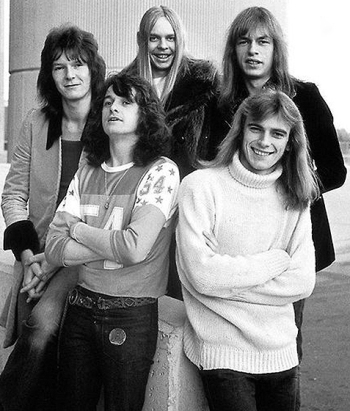
Yes PicIt’s time for another list that no one cares about. With films and gaming, I’ve got cred. Music… Well, this is just what I like. And what I like is Yes.

Yes started as a psychedelic band, but moved quickly into art rock, creating works of stunning complexity and beauty. They were something new and no one has matched them. It took only three albums for them to reach full mastery of the form, but such perfection lasted only 6 years and 6 albums. They fell apart in the middle of making Tormato in 1978, and while the band has existed in numerous forms up to the present day, it has never came close to what it once was. Unfortunately, I first saw them in 1983, during the horror of what was the 90125 tour.

A top 10 is really wrong for Yes, but hey, I don’t make up the rules. I could easily make this a top 20 – without adding additional albums. My 9th and 10th spots are really ties with a bunch of other songs, which I’ll give honorable mentions to: Perpetual Change (The Yes Album), Long Distance Runaround and Heart of the Sunrise (both from Fragile), Siberian Khatu (Close to the Edge), and The Revealing Science of God (sides 1 of Tales from Topographic Oceans).

Yes could be excellent live, but I’ve found them at their finest on studio recordings, so my embedded videos only include one live performance, and one fake live performance.


#10 – Ritual {Nous Somme du Soleil} (Tales From Topographic Oceans)

After four (glorious) sides of psychedelic new age jazz, Ritual drops us into the gentle and easy to grasp Nous Somme du Soleil, and it is like all the tension of the world has been released. I admit to giving this a slight boost to get another album in the top 10, which is equally true of #9.


#9 – Roundabout (Fragile)

It seems a statement of what prog rock would be, and when I heard it (edited for radio) in 1971, there was nothing like it. It’s Howe and Anderson, playing off each other, with that unrelenting bass pounding everything into submission.


#8 – The Gates of Delirium (Relayer)

Out went Wakeman, in came Patrick Moraz, and with him, a bit of jazz to add even greater complexity. It’s about war and conflict and the extent that a band could push the limits of rock.


#7 – Yours Is No Disgrace (The Yes Album)

In case you forgot these guys could rock, here’s your reminder. I’ve tried to make sense of the lyrics. Don’t. Just go with the flow.


#6 – Wondrous Stories (Going For The One)

Something different on this list, Wondrous Stories is short, gentle, and straightforward. It’s also beautiful.


#5 – I’ve Seen All Good People (The Yes Album)

It’s half pastoral and half country rock.


#4 – Awaken (Going For The One)

Out went short-timer Moraz (pushed) to allow room for Wakeman’s return, which he used to play the organ bits in a cathedral over a phone line as the rest of the band played in the studio. Yes never did anything the easy way.


#3 – Starship Trooper (The Yes Album)

Yes nails down who they were with this multi-part, multi-layered song cycle. It leaps all over the place and does it majestically.


#2 – Close To The Edge (Close To The Edge)

A masterpiece on their greatest masterpiece album, Close To The Edge takes up a full album side, and it could have gone on for another hour.


#1 – And You and I (Close To The Edge)

It doesn’t get better than Close To The Edge, so #1 goes to another song off that album. It’s complex as well, and goes in strange directions. It also has a melody of strange beauty.

Dec 022020
  December 2, 2020

Just released, a collection of my 109 reviews of 1930s horror films.

A collection of my 109 reviews of 1930s horror films.


Here you’ll find a complete guide to the horror films of the 1930s. There are 109 surviving horror movies from the decade and this book examines each one. It discusses the good and bad, and places them within the three legs of Hollywood horror: Classic Horror, Poverty Row, and Old Dark House films, before switching to Britain for Quota Quickies and then investigating what Germany, Mexico, China, and the rest of the world had to offer.

The Birth of Monsters covers the social changes, people, and important events that influenced the creation of horror cinema. It discusses how Universal and Carl Laemmle Jr. led the way, and the rest of the Big 5 and Little 3 studios followed grudgingly. And then Joseph Breen brought it all tumbling down. It’s filled with details and stories that make the movies even more enjoyable and places them in the context of the times. Which film was a scam? Which promoted quack science? Which picture got around the Production Code, and what was the first movie made from the work of a Black playwright?

But this isn’t a history book. The Birth of Monsters is about the films themselves: the themes, plots, and characters. Which films are masterpieces that changed popular culture and which are best forgotten? It is a book of reviews, 109 of them. If you want to know which Golden Age, horror films to seek out, The Birth of Monsters will point the way.

Come join Frankenstein, Dracula, The Mummy, The Invisible Man, Hjalmar Poelzig, Ewin Drood, Richard III, Ygor, Svengali, King Kong, Fu Manchu, Dr. Jekyll, Count Zaroff, The Bat, Dr. Moreau, Alraune, The Golem, Murder Legendre and his zombies, Death, Sherlock Holmes, and Sweeney Todd, as well as Boris Karloff, Dwight Frye, Fay Wray, Tod Browning, Vincent Price, James Whale, Myrna Loy, Humprey Bogart, Ginger Rogers, Cantinflas, Basil Rathbone, Charles Laughton, Claude Rains, Max Steiner, Gloria Stuart, and Bela Lugosi.

Oct 262020
 

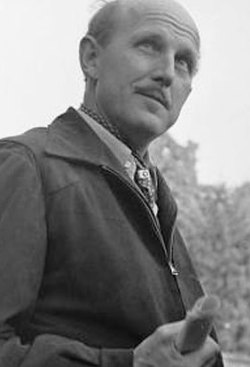
michael-powellMy bio for Michael Powell is a bit longer then usual as people who don’t breath cinema don’t seem to know him.

Powell has been called the greatest British director by those more knowledgeable than I, and I wouldn’t argue the point. His films wrap me into other realities. More than any other director on my Great Director’s Lists, his films stand apart—no one makes films that look like his. He was a perfectionist, and a fiend in demanding things be his way, yet he was open to the ideas of his casts and crews, or sometimes just let them work it out, and shared power and tasks with his producing partner Emeric Pressburger.

Powell’s films are symbolic and surreal. Mundane reality had little interest for him, though he would merge documentary style filmmaking with his narrative strangeness. His themes often involve obsession, particularly for art, as well as the suffering that caused. He would compare our normal society to something outside it, something more fundamental. That otherness was “better” but also more dangerous. It was beyond our understanding, and so likely to destroy us.

His creed was “All art is one.” Film was the best form because it could encompass all the others. He sought to integrate theater and dance and song and painting, and he succeeded.

He learned his craft turning out Quota Quickies in the 1930s. In 1939 Alexander Korda teamed Powell with screenwriter Pressburger and the two got along so well they formed a production partnership that lasted nearly twenty years during which they credited directing, writing, and producing under the name The Archers. Since Powell did a majority of the directing, and this is a list for directors, I’m calling it a Michael Powell list, although most of the films belong to both of them equally.

The Archers spent the next 8 years making a combination of B&W wartime propaganda films and existential epics. Given a nearly free hand by the Rank organization, these later films were like nothing else. What really stood out was their incredible use of color (often in collaboration with cinematographer Jack Cardiff). It upset the Technicolor technicians greatly as Powell refused to do things the normal way. These include some of the finest films ever made, and unquestionably the most beautiful.

The Archers era of color extravaganzas ended when J. Arthur Rank decided The Red Shoes would be a flop (he was wrong), so severed relations with the Archers, sending them back to Korda, and less freedom and less money. The results were mixed, and when that relationship soured, The Archers found themselves without backing, and eventually dissolved the company.

On his own, Powell directed Peeping Tom, a voyeuristic psycho-killer film that is now greatly revered, but in 1960 shocked and disgusted both critics and audiences and was pulled from theaters, mostly ending his career in England. He made a few more films in Germany and Australia, and re-teamed with Pressburger on one of those and a final children’s movie.

It’s tempting to switch from my normal top 8 to a top 10 or 12 for Powell, but I’ll just include a few extra honorable mentions

The first goes to The Phantom Light (1935), an enjoyable Quota Quickie Old Dark House movie, set in a lighthouse (My review). And an honorable mention to Contraband {aka Blackout} (1940), the second of two wartime pictures staring Valerie Hobson and Condrad Veidt (the first is below). It’s a mix of propaganda and Hitchcockian spy thriller. Next a pair of honorable mentions to The Life and Death of Colonel Blimp (1943) and A Matter of Life and Death (1946), the first two of The Archers’ series of spectacularly beautiful color films.

Finally two more honorable mentions to films I was sure were going to make the top 8 when I started this. The Battle of the River Plate {Pursuit of the Graf Spee} (1956) is an unusual war picture. The first half has all the combat, but the picture really takes off when the ships are sitting still and politics and trickery take over. 49th Parallel (1941) is propaganda raised to art. It makes the Nazi survivors of a doomed U-boat human, which makes them more dangerous.

And a pair of dishonorable mentions to two ill-considered British/American collaborations arranged by Korda, where the Hollywood moguls forced casting choices that didn’t fit or were against the wishes of the actors (who then sabotaged production), fought everything The Archers were doing, didn’t keep up their side of the financial agreements, and mangled the final product for American release. To be fair, The Archers don’t get away without blame as they knew what they were getting into (or should have known) yet refused to adjust to the situations when clearly they should have. The first of these is Gone to Earth (1950) made in “cooperation” with David O. Selznick, who massively cut the film and inserted new scenes for the US and released it as The Wild Heart. (And yes, Selznick’s wife, Jennifer Jones, was gorgeous in the lead, but also easily a decade too old), The other is The Elusive Pimpernel (1950), this time made with the “support” of Samuel Goldwyn (My Review).

So, onto the best of the best:

#8 – The Spy in Black (1939) — This is the first of the Hobson/Veidt films. This time Veidt is a German submarine captain with nefarious plans in the UK and Hobson is his spy contact. There are crosses and double-crosses. It’s more serious than their next outing would be, though nearly as much fun and overall a bit smarter. This and Contraband would rank higher, as they are both entertaining and high quality, but they use only The Archers’ skill, not their idiosyncratic view of the world.

#7 – The Edge of the World (1937) — After 21 films, Powell finally had the freedom to make what he wanted. It tells the story of the hardships and abandonment of an island in the Outer Hebrides. It is the precursor of what would come after as it’s all here: themes of tradition vs the modern world, man vs nature, the mystical vs the mundane, outsiders vs society, life vs death, and grief. It contains a general feeling that the universe is beyond our understanding. It has beautiful cinematography as well as sometimes a documentary feel. The ending of the plot is weak, but the story isn’t the plot. This is one of two non-Archers film on this list.

#6 – The Red Shoes (1948) — Probably The Archers’ most famous work, I suspect some fans might find my rating a bit low. It is, after all, stunning from the first frame. One can spend the entire length of the film gazing, gap-mouthed, at the colors that shouldn’t be possible. The Red Shoes Ballet portion is enough to get this on any list of the great films. But the script lacks subtlety and the actors, mostly chosen for their dance skills, overplay their parts, so 6th is about right.

#5 – The Small Back Room {Hour of Glory} (1949) — Leaving The Rank Organization meant The Archers didn’t have money for huge, beautiful, Technicolor marvels, so they made an intimate, beautiful, B&W marvel. The plot follows a bitter, alcoholic bomb specialist as he investigates a new German device during WWII, but the story deals with his psychological trials and failings. The film reunites David Farrar and Kathleen Byron from Black Narcissus. It’s tense and thoughtful, taking some shots at British politics and society between the more personal moments.

#4 – Bluebeard’s Castle {Herzog Blaubarts Burg} (1963) — Seldom seen, this is an amazing, colorful, and compelling film opera. The Archers’ longtime production designer Hein Heckroth called Powell to come to Germany and make this film for TV. It’s the second of two non-Archers films on this list. (My full review)

#3 – The Tales of Hoffmann (1951) — This is the ultimate example of Powell’s “composed cinema,” where the film is put together from separately created pieces—and as they are separate, they can be the best in their specific areas. It’s a combination of ballet, opera, theater, poetry, architecture & design, and painting, encompassed in the tricks of a motion picture. This is art in pure form. (My full review)

#2 – I Know Where I’m Going! (1945) — A magical realist fable that’s pure Archers. Wendy Hiller stars as an obscenely practical yet somehow likeable woman who travels out of her normal world to marry for money and power, but the universe gets in the way.

#1 – Black Narcissus (1947) — The most beautiful film ever made, and one of the best, Black Narcissus is a masterpiece of amorous color. Five nuns are sent into the Himalayas to turn an ex-pleasure palace into a nunnery, and it’s a character drama, a commentary on British society and/or colonialism, an erotic tale, and a horror movie. (My full review)

Aug 292020
 
four reels

Bill (Alex Winter) and Ted (Keanu Reeves) have reached middle age without having written the song that will create utopia. They have no song, no band, no jobs, no prospects, and even their marriages to the princesses Joanna (Jayma Mays) and Elizabeth (Erinn Hayes) are fraying. One bright spot is their daughters, Thea (Samara Weaving) who is the second most adorable person ever born, and Billie (Brigette Lundy-Paine) who is the most adorable person ever born. That’s not specified in the story, but it’s a great truth: they are unbelievably adorable. Things get worse for Bill and Ted when they are summoned into the future by Rufus’s daughter Kelly (Kristen Schaal) where they are told if they don’t find the song within the day, reality will come apart. With no inspiration, the pair travel through time to meet their older selves to try and learn the song from themselves while their daughters seek the finest musicians of all time to make the band they think their fathers’ need.

This is the greatest movie ever made.

Am I over praising it? Absolutely. But this is the movie we need now. This is its time. If there’s ever been a more perfect fit for a film with reality, I don’t know it. Perhaps it won’t end up as the best film of the year, but it will be THE film of the year.

In this miserable time, filled with hate and doom and surrounded by loneliness, there’s been no cinema for nearly six months. Nothing. A huge gaping void to go with the huge gaping void which has been life, and Bill and Ted come along to fill it.

Let’s see if this sounds familiar. The world is falling apart. Life isn’t what one thought it would be. There’s anger and despair and everything seems pointless. Dreams have been lost. Seems a lot like 2020. But there is an solution. It’s really simple while being as deep as philosophy gets. But here’s where Face the Music diverges from our reality: In the film it’s clear they are going to adopt that solution. I’m not so hopeful for reality. But for 90 minutes, I can join Bill & Ted & Thea & Billie and live in that solution, and wow, did I need that. We all need that.

biilted3Outside of that, you know what you’re getting with Face the Music. It’s funny and fast-paced, with reasonable production values. That is, it’s a good sequel, and very much like its two predecessors, Bill & Ted’s Excellent Adventure (1989) and Bill & Ted’s Bogus Journey (1991). It has a lot of call-backs to the earlier films, but they are all welcome and nothing is over done. It’s shifted only slightly in that the first two films were mildly heartwarming where this one might have you hugging your loved ones as your heart grows two sizes.

Reeves can still manage being Ted while encompassing change and disappointment. Winter is even better as Bill—so much the same, but aged, and with a twinkle that’s missing from his companion (and they play with that). But the standouts are Weaving and Lundy-Paine. I was perfectly happy to spend time with Bill and Ted, but Thea and Billie were even more delightful. Spin them off into their own feature and I’m there. They felt not only like the future of the “franchise,” but like the future itself.

If our dismal civilization is going to make it, it will be due to Thea and Billie.

Removed from this place in history, Face the Music is a light and airy concoction. It’s silly, with no interest in treading new ground. It’s unlikely to spawn catch-phrases as the first did, nor win Academy awards. It’s a sweet, almost gentle picture, that wants nothing more than to remind you that love is good, things don’t have to be terrible, and maybe we should all just try being excellent to each other. In ten years this will be a likable enough film. But it isn’t ten years in the future. It’s now. And now, I love this movie.

Aug 282020
  August 28, 2020

I ranked the Bond title sequences, and this is an addendum to that. I grant myself some knowledge of film so that ranking has some minimal meaning. This is just how much I like the songs. I claim nothing more than that.

I’m ranking only the main title themes from both the EON and non-EON films (with my comments repeated from the title sequence ranking). Honorable mentions to The Look of Love from Casino Royale (1967) which isn’t a theme song but is really good, James Bond is Back from From Russia With Love which is more of a snippet than a song, and 007 Theme originally from From Russia With Love and then in many Bond films but it’s never an individual film’s main theme; if it were I’d rank it quite high.

If you want to hear the songs, bounce back to my title sequence ranking as I’ve embedded all the songs there, except for the newest (no title sequence yet as the film hasn’t been released due to Covid), which I’ll embed here.

Starting with my least favorite:

#27 Another Way to Die

Quantum of Solace (2008)
Performed by Jack White & Alicia Keys; Composed by Jack White
This song exists only to make Die Another Day sound less terrible. Black and Keyes’s voices tear at each other, making fingernails on a blackboard pleasant by comparison. They just yell at each other. Black was never going to fit but Keyes could have pulled off a Bond theme, but she doesn’t sing here; she yelps. The song is one half alternative and one have commercial rock, and all overproduced. It is unpleasant to listen to. The worst song in Bond history, which is saying something.

#26 Writing’s on the Wall

Spectre (2015)
Performed by Sam Smith; Composed by Sam Smith & Jimmy Napes
I hate this song so much. No one will remember it in a year. It’s slow and depressing, which is the opposite of “Yay action film!” An unpleasant falsetto (because nothing says Bond like falsetto) plunges into a slow, string-filled disaster. Is it sexy? No. Dangerous? No. Exciting or action-oriented? No. Moody, whiny, and barely moving? Yes. This song says: The next two hours will be not just slow, but depressing. Enjoy.

#25 Never Say Never Again

Never Say Never Again (1983)
Performed by Lani Hall; Composed by Michel Legrand
Horrible TV ‘80s pop. If anything condemned this film, it was the music, which was bad throughout, but the theme was a special level of bad.

#24 Die Another Day

Die Another Day (2002)
Performed by Madonna; Composed by Madonna & Mirwais Ahmadzaï
I looked it up in the Universal Dictionary of Songs and yes, this is technically a song. Autotuning replaces singing. Who thinks Bond and techno goes together? This is a poor dance song I probably wouldn’t object to (more than others) if I was at a rave, but would never listen to and would put real effort into turning off if I heard it anywhere else. On the positive side, it is not low-power and dull, which is the biggest sin for an action movie theme. Perhaps without the robo-voice it might climb a few notches.

#23 All Time High

Octopussy (1983)
Performed by Rita Coolidge; Composed by John Barry & Tim Rice & Stephen Short
Since adult contemporary ballads never fit Bond, and are rarely good, why did they keep using them? This song sucks the life out of the film, your speakers, and anything it is near. It will fit nicely as the second to the last dance song at your uncle’s third wedding reception or for a made-for-TV, ’80s, romantic dramady.

#22 A View to a Kill

A View to a Kill (1985)
Performed by Duran Duran; Composed by John Barry & Duran Duran
Bad boppsy ‘80s pop, I suppose this explains why they’d stuck with terrible adult contemporary songs for so long. When they tried to get with it it got ugly. This is the worst excesses of cheese. Duran Duran has no connection with Bond. At least it has energy, but the energy of a twelve-year-old girl’s sleepover. I will grant that “a view to a kill” is not a phrase that slides nicely into a song lyric.

#21 Moonraker

Moonraker (1979)
Performed by Shirley Bassey; Composed by John Barry & Hal David
Another adult contemporary, which in this case means Muzak. The wonderful Bassey can’t save it. Still, it would have been worse with anyone else singing it, and she gives it the slightest tinge of Bond.

#20 Licence to Kill

Licence to Kill (1989)
Performed by Gladys Knight; Composed by Narada Michael Walden & Jeffrey Cohen & Walter Afanasieff
It’s old school Bond, just less memorable. It starts out bold, and sounds like Bond, and for a moment it seems like this will be a great one. But then it fades, sounding less jazz house, and more glitz and strings. In this instance, less clarity would help. “I Got a licence to kill, And you know I’m going straight for your heart” is not a line I want to remember, but it is drilled in to me.

#19 You Know My Name

Casino Royale (2006)
Performed by Chris Cornell; Composed by David Arnold & Chris Cornell
Please don’t make me listen to this thing again. It isn’t a song written by an artist, but one constructed by a machine. Insert generic ‘00s rock backing. It is overproduce to death. No one hums this song to themselves. That said, it again gets points for not be a soft ballad. It doesn’t drag down the movie, so, that’s something. Another singer may have been able to breath some life into it. Cornell badly dates the song and the film. 2006 isn’t all that long ago, but it sure sounds it.

#18 From Russia With Love

From Russia with Love (1963)
Performed by John Barry (title sequence)/Matt Monro (vocal version); Composed by Lionel Bart
Elevator music. This is perfect for your grandmother’s (or more likely, great grandmother’s) weekly canasta party. It is likely to fade from your mind as soon as it is done playing, which puts it above others. At least they used the drab instrumental version instead of the sickening vocal one by Matt Monro that infects the picture later. Still, there’s some painful organ work on this one. I am grading it based on its theme, not on the James Bond theme that brackets it and makes it come off much better. If I was counting Monro’s version, this would drop to 24th.

#17 The Man With the Golden Gun

The Man with the Golden Gun (1974)
Performed by Lulu; Composed by John Barry & Don Black
After the new of Live and Let Die, we go old school again. The Las Vegas vibe is updated a bit with some pointlessly grinding guitars. Lulu does her best Bassey imitation, and squeaks by. While the song is really, really Bond, the problem is that it isn’t very good. It is obviously modeled after earlier songs and it can’t keep up. It’s pretty much Thunderball 2.0.

#16 No Time to Die

No Time to Die (2020)
Performed by Billie Eilish; Composed by Billie Eilish & Finneas O’Connell
This one has grown on me, but my god people, cut it out. I know the Craig-era Bond films have been downers, but come on, these are still action pictures. This is yet another depressing song in a line of depressing songs and wow is it slow and bleak. It actually picks up some power (bleak power) at the 3-min mark, and that shows the problem with the song: it’s frustrating. It ends before it should. It starts with a power level of 1 and then builds to 5 at that 3-min mark, and it should then go on to maybe a 9, but it just pulls out instead. The song works surprisingly well as background music during the film.

#15 The World is Not Enough

The World Is Not Enough (1999)
Performed by Garbage; Composed by David Arnold & Don Black
I’ve forgotten it by the end of the sequence. Which means it isn’t so bad as to mess up anything, but not good enough to actually acknowledge it as music. The fact that being a blank puts it above a third of the themes is damning for Bond themes in general.

#14 You Only Live Twice

You Only Live Twice (1967)
Performed by Nancy Sinatra; Composed by John Barry & Leslie Bricusse
What happened? After brass and sass overload of Goldfinger and Thunderball the Bondness is sapped away with this slow, soft song. It isn’t terrible, just middling and silly.

#13 Tomorrow Never Dies

Tomorrow Never Dies (1997)
Performed by Sheryl Crow; Composed by Sheryl Crow & Mitchell Froom
Surprisingly good, considering Crow is a singer songwriter, not a nightclub performer. But her song works, even if only in the films titles. It could use 50% less screeching. It needed a non-indie rock singer with more range. Speaking of which, over the final credits runs the rejected theme, K. D. Lang’s Surrender. It is a better song, but it harkens too far back; it would have been a great song for Connery.

#12 Thunderball

Thunderball (1965)
Performed by Tom Jones; Composed by John Barry & Don Black
It’s a really dumb take on the previous song, Goldfinger. They saw how well that worked, and tried to do something like it, and as is often the case, couldn’t. It’s a bit too fluffy between its deeply stupid lyrics: He strikes like thunderball Really? And what kind of a strike is that? And yes, I know it is a military term for an atomic explosion. That doesn’t help. But it feels so very Bond and no one can fault Jones for giving it his all. The song is like the movie itself—dumb and showy without being exciting. I’d move it up a slot if it wasn’t so damn memorable. I really don’t want it to be.

#11 The Living Daylights

The Living Daylights (1987)
Performed by A-ha; Composed by John Barry & Pål Waaktaar
Following the Duran Duran money-maker, the producers wanted to go with another trendy pop band, so they called in A-ha, masters of one hit (not like Duran Duran will be remembered for more than one) Well, it is better than Duran Duran’s attempt. Faint praise indeed. It’s ‘80s europop, which is not a music genre in any way related to Bond. If I have to have a Bond song in the wrong genre, I’m glad it is bouncy, and this is bouncy.

#10 Skyfall

Skyfall (2012)
Performed by Adele; Composed by Adele & Paul Epworth
The best of the Craig era, where the competition has been light. It tends to be overrated because it so outshines the Bond songs around it, and because Adele is a significantly better singer than the franchise had drafted for many years. But the melody just isn’t that strong and the lyrics should not be examined. But ignoring its too-great praise, it is a good song. It sounds like Bond, connecting back to the Rat Pack era Connery Bond themes, but updated. Perhaps it is more melancholy than a theme for an action film should be, but then it’s a melancholy movie.

#9 Goldeneye

GoldenEye (1995)
Performed by Tina Turner; Composed by Bono & The Edge
This is a weird one. On its own, I never want to hear it. I’d never pull out the album and have a listen. But as a theme, in those amazing titles (perhaps the best sequence of any film ever made), it works so perfectly. The lyrics cover everything about Bond’s world while not making a coherent whole: Sexy, smoky, dangerous, and nonsensical. This is Bond the way Goldfinger was, except that’s a song I can enjoy listening to on its own. Only Bassey managed to slip in more emotion than Turner does here.

#8 For Your Eyes Only

For Your Eyes Only (1981)
Performed by Sheena Easton; Composed by Bill Conti & Mick Leeson
Middling adult contemporary pop, it is at least a step up from Moonraker. It still isn’t a song for an action film. It gets points for it being exclusively about a girl stripping.

#7 On Her Majesty’s Secret Service

On Her Majesty’s Secret Service (1969)
Performed by The John Barry Orchestra; Composed by John Barry & Hal David
It’s as if they forgot to write a theme and just laid some random background music over the titles. This is background music for a scene in the film, not an opening. It’s pretty good background music, and does work behind action and fast cars during the film, but as a theme it is a huge nothing. Empty air.

#6 Nobody Does It Better

The Spy Who Loved Me (1977)
Performed by Carly Simon; Composed by Marvin Hamlisch & Carole Bayer Sager
The first song titled other than the film. It is also the best in the long line of adult contemporary songs that were to follow.

#5 Live and Let Die

Live and Let Die (1973)
Performed by Paul McCartney & Wings; Composed by Paul & Linda McCartney
Excellent. One of the few post-Connery songs worth listening to on its own. The producers wanted someone else to sing, but McCartney said him or no song.

#4 Diamonds Are Forever

Diamonds Are Forever (1971)
Performed by Shirley Bassey; Composed by John Barry & Don Black
At some point they had to think, just have Shirley Bassey do all the songs. It’s a good thought. Again, she hits it perfectly. This is a deeply Bondian song. Loud and brassy, it is about betrayal and disillusionment, as well as hand jobs, because it is important to caress, touch, stroke, and undress your diamond. Co-producer Harry Saltzman thought the song too obscene.

#3 Goldfinger

Goldfinger (1964)
Composed by Leslie Bricusse & Anthony Newley & John Barry; Performed by Shirley Bassey
Wonderful. It screams out, dark, dangerous jazz club. It says sex and death and excitement and doom and explosions and cruelty and it is all good. No doubt the power comes from Bassey, who takes it to mythic levels. But even without her, it is a memorable tune. It is hummable.

#2 James Bond Theme

Dr. No (1962)
Performed by John Barry & Orchestra; Monty Norman; Composed by Monty Norman
James Bond Theme + a bit of calypso: Fantastic. Gets right to the heart of Bond, and is ‘60s action cool. It’s fun to hear and it gets your blood pumping. This is the iconic theme for an iconic character and you can’t get it out of your head. It’s all good.

#1 Casino Royal

Casino Royale (1967)
Performed by Herb Alpert and the Tijuana Brass; Composed by Burt Bacharach
This is the heart of ‘60s cool. It’s jazz with trumpets and it says Bond. It’s also energetic. Yeah, it’s of a time, but so is Bond and I love it. It’s repeated during the end credits with lyrics sung for humor, which may or may not work for you, depending on your mood. Of note, the film also supplied The Look of Love which also is a winner, mainly due to Dusty Springfield’s dirty sex now vocals. Actually, the entire score is excellent. Something had to be.

Jul 232020
  July 23, 2020

Once again, a musical list that no one asked for, but it was on my mind, so here it is.

Gabriel has been one of my favorite artists from before I had any idea on who he was. He was the mind behind the progressive band Genesis, and when he left it, so did most of the value. His solo career has been a strange combination of British prog-rock, New York art rock, world music, retro, political activism, and spiritualism.

I’ve seen him twice in concert, and the first was the finest show I’ve ever seen, with nothing close. That concert was recorded and is one of the sources for his live album, Plays Live (1983).

He’s always been an album artist. As such, choosing best songs of his is very odd. I don’t listen to individual songs, but to entire albums. And the quality of individual songs rarely equate to the quality of the albums they are on. Ranking his “normal” studio albums from best to least, I’d place them Security, Melt {Peter Gabriel 3}, Car {Peter Gabriel 1}, So, Scratches {Peter Gabriel 2}, Us, Up. But Security does very poorly on my list below, while So does markedly better than the others.

A few honorable mentions: Slowburn (Car), On the Air (Scratches), Family Snapshot (Melt), And Through the Wire (Melt), Games Without Frontiers (Melt), San Jacinto (Security), I Have the Touch (Security), Lay Your Hands on Me (Security), Wallflower (Security), Don’t Give Up (So), Blood of Eden (So).

 #10 That Voice Again (So)


#9 Come Talk to Me (Us)


#8 Secret World (Us)


#7 Modern Love (Car)


#6 The Rhythm of the Heat (Security)


#5 Here Comes the Flood (Car)


#4 Red Rain (So)


#3 Biko (Melt)


#2 Solsbury Hill (Car)


#1 In Your Eyes (So)


Jul 192020
 
two reels

Booker (Matthias Schoenaerts), Joe (Marwan Kenzari), Nicky (Luca Marinelli), and their leader Andy (Charlize Theron) are the best mercenaries in the world, in large part due to their being immortal heroes. Their latest job turns out to be a trap, set by ex-CIA agent Copley (Chiwetel Ejiofor), who wants to capture them and turn them over to evil pharmaceutical CEO Merrick (Harry Melling). They escape, but now must hunt down Copley while he hunts for them. And at this delicate time, a new immortal awakens, the first in 200 years. Andy must find Nile (KiKi Layne), a marine who just recovered from dying from her throat being cut, and bring her into the group as they fight to avoid capture.

Covid has shut down the theaters and with nothing (or little) new for months, The Old Guard has been received with rejoicing. It’s an actual movie, with actual stars and special effects and fight choreography, and it’s been so long since we’ve had one of those. It also has a fun premise—riffing off of The Highlander, plenty of action, a diverse cast, and Charlize Theron, whose proven herself to be both a fine actress and a kickass action star. What’s not to love?

Too much.

Considering NetFlix’s track record, I should have tapped down my expectations. It’s not a bad film, but about as weak as you can make when you start with “The Highlander, but with special forces and Charlize Theron.” The fights are reasonable, but outside of those, The Old Guard is not a good looking film. The colors are drab, the shots are uninventive, and the lighting is no better than you’d get from a weekly TV show. The direction is totally without flair and is scraping by at workman-like.

The script, particularly the dialog, is a bigger problem. There’s a lot of talking that says very little. This is an “immortals kill people” movie, so stopping to have a discussion on how one of our immortals isn’t going to kill people is frustrating, because we know she’s going to kill people. Likewise the chatting about family is pointless as it goes nowhere. They’d have been much smarter to simply have our new immortal have no human connections.

The characters are a mixed bag. Theron is given little, but she doesn’t need much, and the two gay crusaders are the high point of the film. However our new recruit is barely a character who just objects to being there over and over again. The main villain is a cartoon cliché. This movie is going for gritty, so having a guy running around who has no layers—he’s just EEEEEVVILLLL—is out of place and lazy.

And yet I haven’t gotten to the real problems. Firstly, they needed to have chosen a lead. Who’s the main character, Andy or Nile? I’d have chosen Andy, but they needed to have chosen one of them, beefing up their part, letting us into their thoughts, and letting us connect with that person. With both using up screen time, the focus is missing. The other even larger issue, is who thought it was a good idea to coat your Highlander clone with depression? In the original Highlander, the main character was depressed about his situation, but that wasn’t the tone of the entire film. This one is all about sad immortals, and boy are they sad, and boy are they going to let you know. So… much… sad. These are drama queen immortals, which could have been interesting (could have, though probably not) in a more philosophical picture, but the key theme of this film is shoving sharp objects into other people, so maybe actually aiming for fun would have been clever.

The Old Guard also pushes too hard to be a franchise. It supplies a flashback and dialog about events that have no bearing on this film, but are setup for the next. Unfortunately, that story seems far more interesting than the one presented in this film and I couldn’t help thinking about where that would go instead of dwelling on their fight with evil-pharma guy.

If this sounds pretty dire, well, there’s immortals with blades, gay crusaders, and Charlize Theron, which means The Old Guard has some entertainment value. It just should have had more and I know a dozen directors who could have made it more.

 Fantasy Tagged with: